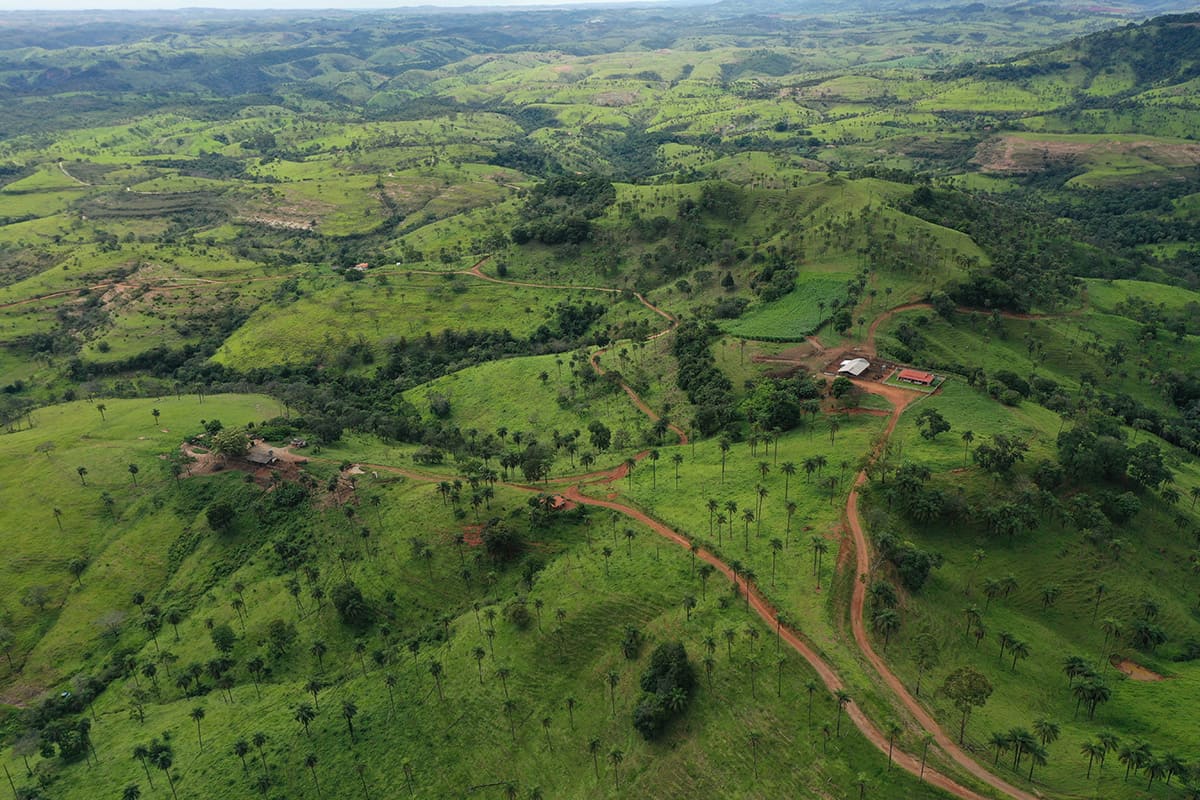
Man of War Rare Earth Project
A large-scale ionic clay-hosted rare earth project in Minas Gerais, Brazil, with 1.35 billion tonnes of inferred resources, averaging 3,437 ppm TREO and 23% MREO, and significant upside through the Fragata and Caravela targets.
Project Overview
A Scalable Platform for Magnetic Rare Earth Supply
The Man of War Project is being developed as a large-scale ionic clay-hosted rare earth system, strategically positioned to supply critical materials for permanent magnet applications.
The project combines district-scale resource potential, favorable magnetic rare earth distribution, and early indications of ionic adsorption behavior, supporting the potential for a relatively simple and environmentally aligned processing route.
From an investment perspective, the project offers exposure to rapidly growing global demand for NdPr, Dy, and Tb, driven by electrification, renewable energy, and advanced technologies.
Mineral Rights Foundation
Core Mineral Rights Supporting the Project
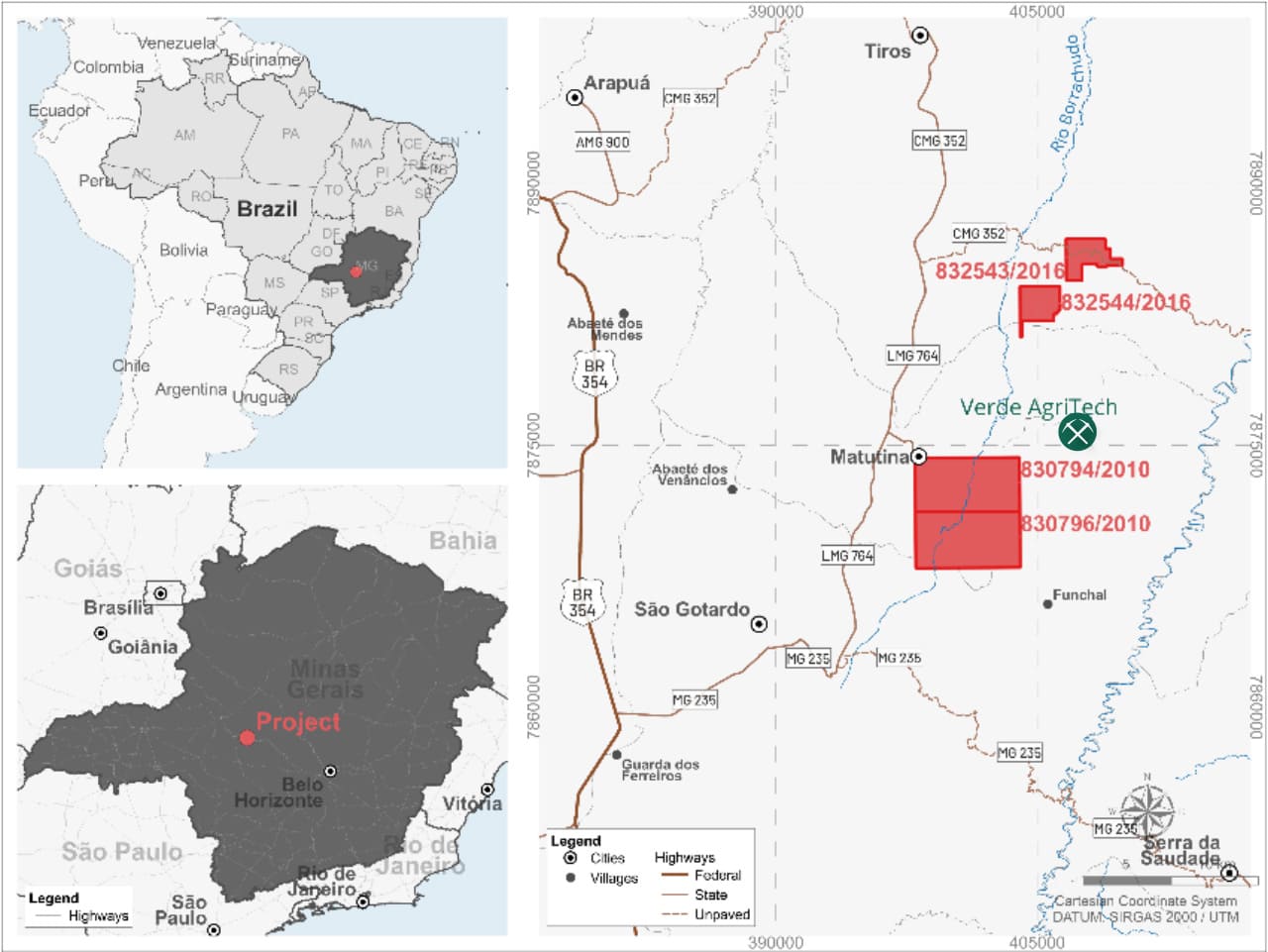
The Man of War Project is anchored by four key mineral rights that form the foundation of the current resource base:
832543/2016
832544/2016
830794/2010
830796/2010
These tenements are located in the São Gotardo and Matutina region of Minas Gerais and collectively define the central footprint of the project.
Target Portfolio
Five Targets Across a 47 km² District-Scale System
The project comprises five identified targets within a total land package of approximately 4,708 hectares (47 km²).
Current Resource
(Included in MRE)
Man of War
2.90 km²
Alto da Serra
3.40 km²
Bálsamo
11.40 km²
Total Current Resource Footprint
17.7 km²
Expansion Targets
(Significant Upside Potential)
Fragata
10.08 km²
Caravela
3.03 km²
These additional targets represent significant upside potential beyond the current resource base.
FRAGATA & CARAVELA — UPSIDE POTENTIAL
Fragata and Caravela: High-Potential Growth Targets
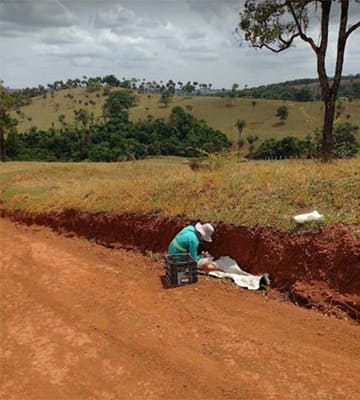
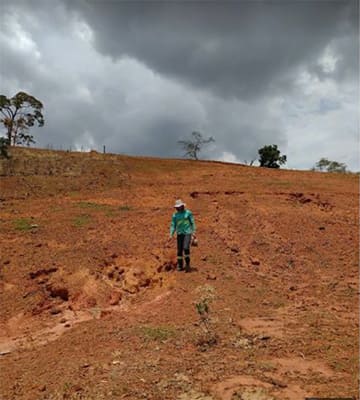
Fragata and Caravela are newly identified targets that represent the next phase of growth for the Man of War Project. Both areas remain undrilled. Results to date are surface channel samples collected from road cuttings, natural outcrops, and other disturbed locations above, within, and below the high-grade horizons of the Capacete Formation — they should not be read as representative of bulk grade prior to drilling.
Fragata Target
Area
10.08 km²
Status
Not yet drilled
Key Surface Results
Sample AP-PM-02
TREO
15,613 ppm
MREO
3,562 ppm
Nd₂O₃
2,726 ppm
Pr₆O₁₁
723 ppm
Tb₄O₇
20 ppm
Dy₂O₃
90 ppm
Sample AP-PM-03
TREO
8,586 ppm
MREO
2,516 ppm
Caravela Target
Area
3.03 km²
Status
Not yet drilled
Key Surface Results
Sample AP-PM-05
TREO
7,563 ppm
MREO
2,611 ppm
Nd₂O₃
2,014 ppm
Pr₆O₁₁
511 ppm
Tb₄O₇
15 ppm
Dy₂O₃
71 ppm
Samples were collected as channel samples from road cuts, natural exposures, and disturbed areas across the Capacete Formation. These early results support the potential for both higher-grade zones and meaningful expansion of the resource footprint. Auger drilling is required to confirm grade continuity and ionic character at depth.
Location & Infrastructure
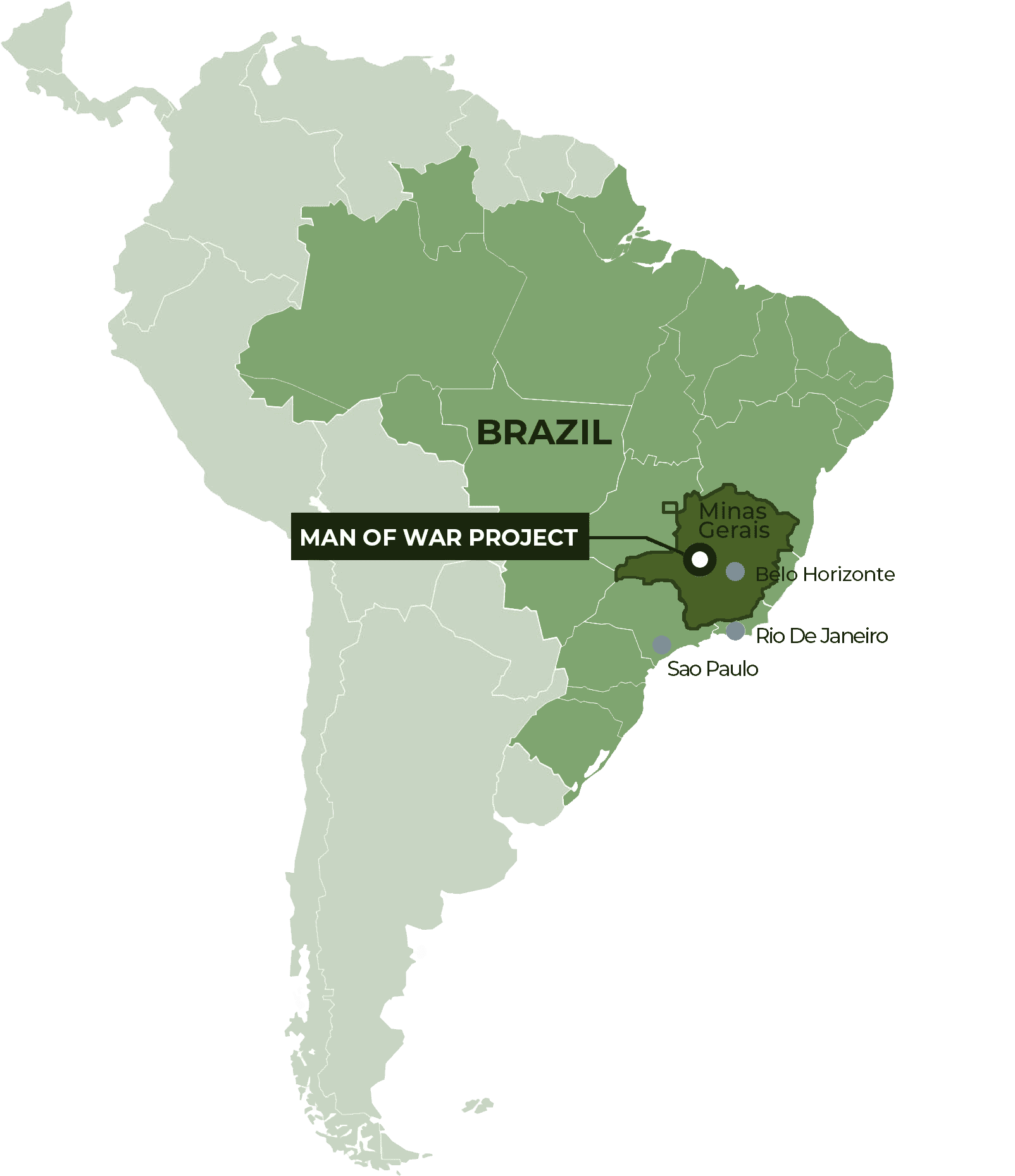
Strategic Location in Minas Gerais, Brazil
The project is located in the São Gotardo and Matutina region of Minas Gerais, a well-established mining jurisdiction with access to workforce, services, and infrastructure.
Belo Horizonte
~300 km
State Capital
Uberlândia
~250 km
Major City
São Paulo
~630 km
Economic Hub
Vitória Port
~820 km
Export Gateway
Infrastructure Highlights
Water Sources
Within ~1.9 km
345 kV power line (São Gotardo / Três Marias)
Within 2–5.5 km
Paved Road Access
Within 2–6 km
This infrastructure proximity supports a favorable development profile and reduced logistical complexity.
Technical Differentiation
Ionic Clay System with Potential for Clean Processing
The Man of War Project is characterized by clay-hosted rare earth mineralization and a preliminary ionic desorption response. These features support the potential for a simpler, lower-impact processing route compared to conventional hard rock deposits.
Clay-Hosted Mineralization
Rare earth elements hosted in clay minerals, enabling simpler extraction methods.
Ionic Desorption Response
Preliminary tests confirm ionic adsorption behavior supporting efficient leaching.
Low Impurity Profile
Potential to produce a mixed rare earth concentrate with low impurities and low radionuclide levels.
Simplified Processing
Lower-impact processing route vs. conventional hard rock rare earth deposits.
Radionuclide Levels
Favorably Low Uranium and Thorium Content
Naturally occurring radioactive materials (NORM) — primarily uranium (U) and thorium (Th) — occur in all REE resources.
Why Low Levels Matter
- Simplified permitting pathway
- Reduced residue management complexity
- Lower transport compliance burden
- Improved product quality and purity
- Stronger downstream customer acceptance
56 ppm Th
Average Thorium (Th)
Average concentration all samples(43-101)
6.3 ppm U
Average Uranium (U)
Average concentration all samples(43-101)
0.39 Bq/g
Average Radionuclide Activity
Oby Calculated average radionuclide activity (43-101 resource data set) based on U+Th content
Data source: Man of War 43-101 Technical Report (Oby Critical Minerals), average of all samples,
Meteoric Rare Earth Press Release Appendix 1: https://www.listcorp.com/asx/mei/meteoric-resources/news/positive-outcome-on-u-and-amp-th-levels-at-caldeira-project-2863612.html
Bq/g calculated assuming secular equilibrium using reported, Unat and Th-232 using standard conversions.
Peer Grade and Resource Comparison
How Man of War Screens Against the Ionic Clay Peer Group
OBY has the highest grade and the largest contained MREO tonnage within its peer group. Its current resource already combines significant scale with standout MREO grade.
Graph of tonnage vs. MREO grade for the total Resources (M+I+I) for global IAC deposits.
Bubble size = overall magnetic rare earth tonnage (grade x resource size)
Data Source: Man of War 43-101 report, Viridis Corporate Presentation, Rare Earths Americas SK1300
Valuation note: Ionic clay/clay-like peers have traded at recent average indicative valuations of ~0.6% EV/in-situ value | ~$C 500/t TREO in-situ | ~$C 2,000/t MREO in situ
MC: Market Capitalization, CAD As of 06/10/2026
Why the peer chart matters
A rare combination in the peer group
Current OBY resource already combines very large tonnage with standout MREO grade.
Positioned for valuation upside
Man of War sits in a zone where valuation can move quickly as the processing route and product story are de-risked.
Competitive within global IAC peers
OBY firmly belongs in this peer set, with clear potential to climb within it.
Development Strategy
One Small Phase to Prove It, One Big Phase to Value It
The Phase 1 / Phase 2 concept simplifies the more complex de-risking roadmap and allows a faster pathway to market.
Phase 1 — Bridge Plant
- Small enough to be permit-friendly and financeable
- Generates production data, cash flow, and offtake leverage
- Lower cost of capital for Phase 2 CAPEX
- Pathway to firm offtake agreements
Phase 2 — Full Scale
- 20+ year life-of-mine anchors valuation model
- Full-scale commercial production facility
- Phase 1 operations potentially running in parallel during permitting
Path to Production and Scale
Permitting drives the timeline to full scale commercial production
- Phase 1 aims to rapidly establish a technically and commercially validated foundation
- Phase 2 captures the full potential
| Category | Activity | 2026 | 2027 | 2028 | 2029 | 2030 | |||||
|---|---|---|---|---|---|---|---|---|---|---|---|
| Technical Development | Exploration drilling + assays (new targets) + updated MRE + bench metallurgy (feeds PEA) |
|
|
||||||||
| PFS+FS Inputs: Infill drilling + M&I resource upgrade + pilot metallurgy |
|
|
|
||||||||
| Engineering | PEA (entire project scope Phase 1 +2) |
|
|||||||||
| PFS (entire project scope Phase 1 +2) |
|
|
|||||||||
| FS (Phase 1, small plant) |
|
||||||||||
| FS Expansion (Phase 2) |
|
|
|||||||||
| Permitting (Phase 1) | Phase 1 simplified licensing (LAC/LAS) + mining concession support |
|
|
|
|||||||
| Permitting (Phase 2) | Fullscale baseline + LAT licensing (LP→LI) for Phase 2 (10+Mtpa) |
|
|
|
|
|
|
||||
| FID / CAPEX Triggers | Target Investment Decision Dates (Phase 1, 2) |
FID 1
|
FID 2
|
||||||||
| EPCM (Phase 1) |
|
|
|
||||||||
| Operations (Phase 1) | Semi-industrial operations while full-scale permitting progresses |
|
|
|
|
|
|||||
| EPCM (Phase 2) |
|
|
|
||||||||
| Operations (Phase 2) | Phase 2 ramp + operations |
|
|
||||||||
Technical Development
Exploration drilling + assays (new targets) + updated MRE + bench metallurgy (feeds PEA)
Technical Development
PFS+FS Inputs: Infill drilling + M&I resource upgrade + pilot metallurgy
Engineering
PEA (entire project scope Phase 1 +2)
Engineering
PFS (entire project scope Phase 1 +2)
Engineering
FS (Phase 1, small plant)
Engineering
FS Expansion (Phase 2)
Permitting (Phase 1)
Phase 1 simplified licensing (LAC/LAS) + mining concession support
Permitting (Phase 2)
Fullscale baseline + LAT licensing (LP→LI) for Phase 2 (10+Mtpa)
FID / CAPEX Triggers
Target Investment Decision Dates (Phase 1, 2)
EPCM (Phase 1)
Operations (Phase 1)
Semi-industrial operations while full-scale permitting progresses
EPCM (Phase 2)
Operations (Phase 2)
Phase 2 ramp + operations
GROWTH & CATALYSTS
Clear Path to Value Creation
Key upcoming milestones expected to drive value creation through 2026
Drilling of Fragata and Caravela Targets
First pass auger drilling to confirm whether surface sample grades are representative of the Capacete formation below ground.
Updated Mineral Resource Estimates (MRE's)
Update of historical MRE to S-K 1300 Technical Report and incorporation of new drilling data from Fragata and Caravela targets as it becomes available. Resource expansion potential estimated to ~2Bt+ based on existing MRE and undrilled target areas.
SGS Canada Metallurgy Program
Advanced bench-scale testwork to prove repeatability of ionic desorption across multiple domains and optimise leach and recovery conditions toward a defined flowsheet.
PFS-Support Infill Drilling
Systematic infill program to increase drilling density within the existing resource, supporting conversion of inferred resources to the indicated category.
Preliminary Economic Assessment (PEA)
Targeted for December 2026 — the PEA will frame the Phase 1 / Phase 2 economics and shift the narrative from geology to development economics.
Drilling of Fragata and Caravela Targets
Tap icon for details
Updated Mineral Resource Estimates (MRE's)
Tap icon for details
SGS Canada Metallurgy Program
Tap icon for details
PFS-Support Infill Drilling
Tap icon for details
Preliminary Economic Assessment (PEA)
Tap icon for details
The Man of War Project represents a district-scale opportunity to establish a globally significant source of magnetic rare earths — with a 2026 roadmap designed to systematically de-risk the asset from large inferred resource to defined development economics.